In countless industrial applications, the quality of compressed air is paramount. Moisture in compressed air can lead to a host of problems, including corrosion of equipment, contamination of products, and reduced efficiency of pneumatic tools. This is where the industrial desiccant air dryer steps in, playing a critical role in ensuring dry, clean air. For businesses relying on these sophisticated systems, understanding proper maintenance and best practices is crucial for maximizing uptime and longevity. Lingyu, a leading name in industrial air treatment solutions, designs robust desiccant air dryer systems.
Understanding the Lingyu Desiccant Air Dryer Working Principle
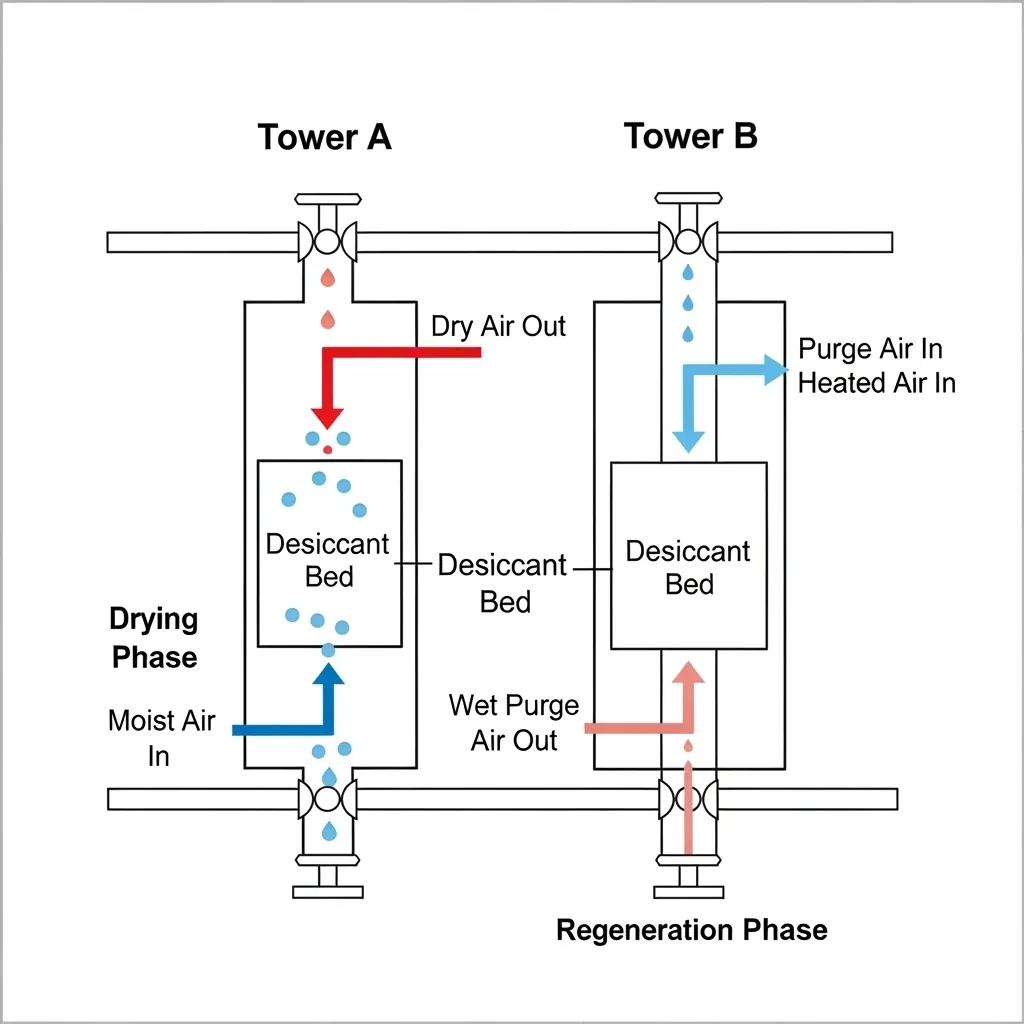
Before diving into maintenance, it’s essential to grasp the fundamental desiccant air dryer working principle. Lingyu desiccant air dryers operate on the principle of adsorption. They typically consist of two towers filled with desiccant material, such as activated alumina or molecular sieves. As wet compressed air enters one tower, the desiccant adsorbs the moisture, drying the air. Meanwhile, the desiccant in the second tower is regenerated, ready for its turn. This cyclical process ensures a continuous supply of dry air. The regeneration process is a key differentiator for various desiccant dryer types, with heatless, heated purge, blower purge, and heat of compression options, all designed to effectively remove the adsorbed moisture from the desiccant bed. Understanding this cyclic desiccant air dryer working principle is foundational for troubleshooting and effective maintenance. A well-maintained Lingyu desiccant air dryer ensures consistent performance.
The Critical Role of the Industrial Desiccant Air Dryer
Lingyu desiccant air dryers are more than just a piece of equipment; it’s a vital component in many manufacturing processes. From pharmaceutical production and food processing to electronics manufacturing and general industrial applications, the demand for ultra-dry compressed air is constant. Water contamination can lead to costly product spoilage, equipment malfunction, and even safety hazards. Lingyu’s range of industrial desiccant air dryers is engineered to meet these demanding requirements, delivering pressure dew points as low as -40°C (-40°F) and even -70°C (-100°F) in some models. Investing in a high-quality industrial desiccant air dryer like those offered by Lingyu is an investment in operational efficiency and product quality.
Maintenance Best Practices for Lingyu Desiccant Air Dryers
To ensure your Lingyu desiccant air dryer provides reliable, long-term service, a proactive maintenance schedule is indispensable. Regular checks and timely interventions can prevent minor issues from escalating into significant and costly downtimes.
1.Consistent Operational Vigilance: Daily Checks & Immediate Action
Effective maintenance of an industrial desiccant air dryer begins with a regimen of consistent operational vigilance through daily and weekly inspections. Operators should make it a habit to visually check the dryer’s pressure gauges daily, ensuring they remain firmly within the specified operating ranges. This simple check can quickly reveal pressure drops or spikes that may indicate an issue. Additionally, listening attentively for any unusual noises or observing for visible signs of leaks can help catch potential problems before they escalate. Weekly, it is advisable to inspect the automatic drain valves for proper operation.
These valves are crucial for expelling condensed moisture, and any malfunction can lead to water bypassing into the desiccant beds, negatively impacting the desiccant air dryer working principle. While Lingyu desiccant air dryers are engineered for robustness, consistent monitoring across these basic checks helps identify early warning signs, enabling prompt intervention and preventing minor issues from becoming major disruptions to the overall desiccant air dryer working principle.
2. Scheduled Replacement and Monitoring of Core Components
The longevity and efficiency of any industrial desiccant air dryer heavily rely on the scheduled replacement and meticulous care of its critical internal components. Regular replacement of pre-filters and after-filters is paramount; pre-filters safeguard the desiccant material by preventing oil and particulate contamination, which can drastically reduce its adsorption capacity and lifespan. After-filters, conversely, capture any desiccant dust that may break off, thereby protecting sensitive downstream pneumatic equipment from damage. The frequency of filter replacement depends on air quality and usage, but typically, filters should be inspected monthly and replaced every 6 to 12 months, or as prescribed by Lingyu’s guidelines for your specific model. Furthermore, the desiccant material itself—the very heart of an industrial desiccant air dryer—requires careful monitoring.
Over time, even with effective pre-filtration, the desiccant will degrade, necessitating periodic testing or replacement, usually every 3 to 5 years, to ensure the consistent, high-quality performance dictated by the desiccant air dryer working principle. For heated desiccant dryers, regular checks of heater elements and temperature controls are also essential to guarantee effective desiccant regeneration, ensuring the Lingyu desiccant air dryer continues to deliver optimal results.
3. Adherence to Lingyu’s Preventative Maintenance Program and Genuine Parts Use
The most effective strategy for ensuring the long-term reliability and peak performance of your industrial desiccant air dryer is strict adherence to a comprehensive preventative maintenance schedule. Lingyu provides detailed maintenance guidelines designed specifically for its equipment, which include regular checks of all moving parts and critical components. This encompasses inspecting changeover valves and purge valves, which are fundamental to the continuous cyclic desiccant air dryer working principle. These valves must be checked for any signs of wear, leaks, or sluggish operation, as their proper functioning is vital for efficient moisture removal and desiccant regeneration. Crucially, when replacements are necessary—whether for filters, desiccant, or valves—always utilize genuine Lingyu replacement parts. Using authentic components guarantees compatibility, maintains system integrity, and ensures that your Lingyu desiccant air dryer continues to operate precisely to its designed specifications. Following Lingyu’s recommended maintenance plan, combined with the exclusive use of genuine parts, is the ultimate assurance against costly unplanned downtime, guaranteeing that your Lingyu desiccant air dryer consistently upholds the high standards of performance and efficiency it was built to deliver.
Conclusion
The industrial desiccant air dryer is an indispensable asset for many businesses, safeguarding equipment and processes from the damaging effects of moisture. By understanding the desiccant air dryer working principle and diligently implementing these maintenance best practices, owners of Lingyu desiccant air dryers can expect enhanced performance, extended equipment life, and significant cost savings over time. Proactive care ensures that Lingyu desiccant air dryer consistently delivers the high-quality dry air crucial for your operations, solidifying its role as a reliable partner in industrial efficiency.
