For engineering, procurement, and construction (EPC) developers, the question is no longer whether to add energy storage—but how to unify solar, batteries, and EV charging into a single, grid-friendly package. A PV-ESS-EV Integrated Energy System EPC project does exactly that: it combines photovoltaic generation, battery storage, and electric vehicle charging infrastructure under one coordinated design, often with shared power electronics and intelligent controls. This approach is gaining traction across commercial campuses, transit depots, and roadside charging hubs. Dyness has been actively supporting such integrated projects with modular hardware and flexible configurations, enabling developers to deliver what is increasingly called an integrated solar-storage-EV charging solution.
How the Three Components Work Together in EPC Projects
In a conventional setup, PV inverters, battery converters, and EV chargers operate as separate silos, increasing both capital costs and installation complexity. A PV-ESS-EV Integrated Energy System EPC design merges these functions through a shared bi-directional converter and energy management system. The integrated PV storage system combines a PV controller and bi-directional converter for “light + energy storage.” Its modular design allows flexible PV, battery, and load configuration. For EPC firms, this means fewer components to source, simpler wiring schemes, and faster commissioning.
Deploying an Integrated Solar-Storage-EV Charging Solution at Charging Stations
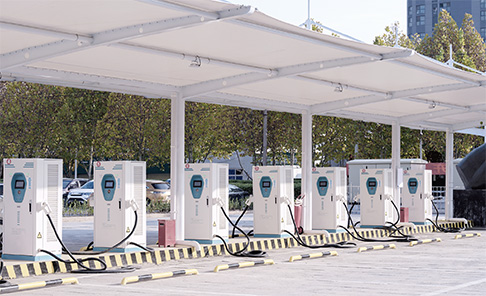
One of the practical applications is the light storage and charging integrated power station. Combining PV and storage, it supplies energy to charging stations, boosts self-generation and consumption, reduces transformer load impact from high-power equipment, enables phased expansion, and meet charging requirements. EPC developers working on highway service areas or fleet depots can start with a smaller battery bank and PV array, then scale up as EV traffic grows—without redesigning the entire electrical infrastructure.
Free Optional MPPT PV Module Access for Cost and Cycle Optimization
Project economics often hinge on how well the system matches site-specific solar conditions. According to the optical storage and charging site conditions and actual needs, the energy storage solution can be equipped with optional MPPT PV modules to support DC access to the PV system, which can further optimize the project construction cycle and cost. This flexibility allows EPC teams to avoid expensive AC coupling hardware and reduce engineering hours, directly improving bid competitiveness.
Final Perspective: A Unified Platform for Smarter EPC Bids
Adopting a PV-ESS-EV Integrated Energy System EPC framework transforms how developers approach renewable mobility projects. Instead of managing three separate workstreams, they deliver one integrated solar-storage-EV charging solution that lowers transformer stress, supports phased growth, and improves on-site solar utilization. With Dyness offering modular, MPPT-ready designs and field-proven integrated converters, EPC firms can confidently bid on projects that demand both technical integration and long-term operational value.
