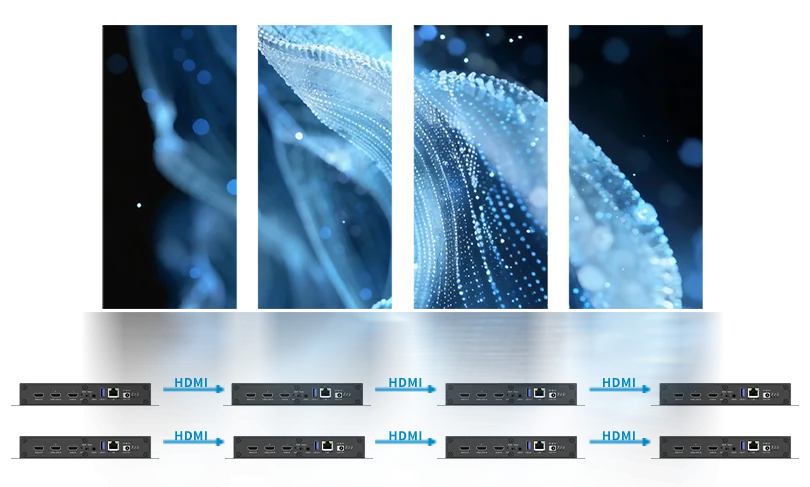
Digital signage systems have become an important tool for businesses, public spaces, retail environments, and entertainment venues to deliver dynamic visual content. However, the display quality depends not only on the LED screen itself but also on the hardware responsible for content playback and management.
Choosing the right Multimedia Player for Digital Signage requires understanding factors such as playback performance, resolution requirements, connectivity, control methods, and application scenarios. A suitable player ensures smooth video playback, efficient content updates, and reliable long-term operation.
For companies planning professional LED display projects, selecting a powerful playback solution can significantly improve audience engagement and system stability. Kystar provides dedicated media playback solutions designed for various commercial and creative display applications, supporting efficient content management and flexible display control.
What Is a Multimedia Player for Digital Signage?
A Multimedia Player for Digital Signage is a hardware device that manages and displays multimedia content on digital screens. It receives content from storage devices, networks, or external video sources, then processes and outputs images, videos, text, and interactive materials to the display system.
Unlike simple playback devices, professional signage players are designed for continuous operation. They often support scheduled playback, remote management, multiple content formats, and integration with LED control systems.
In LED display applications, the player acts as a bridge between creative content and the final visual output. It ensures that advertisements, announcements, branding videos, and interactive content appear correctly on large-format screens.
Consider Display Resolution and Processing Capability
The first factor to evaluate is processing performance. Digital signage projects vary significantly, from small indoor displays to large LED video walls requiring high-resolution content processing.
A basic display may only need standard video playback, while premium applications require support for 4K or higher resolution, multiple content windows, and complex visual layouts. Choosing insufficient processing power can result in image delays, playback interruptions, or reduced visual quality.
Modern players designed for professional LED displays can combine playback functions with advanced processing capabilities. For example, some integrated solutions support high-resolution decoding, multiple material playback, and flexible screen layouts for creative display applications.
Evaluate Content Management and Remote Control Features
Efficient content management is essential for businesses operating multiple digital displays. A professional Multimedia Player for Digital Signage should provide convenient ways to update and monitor content.
Cloud-based management platforms allow users to publish programs remotely, manage multiple screens, and adjust content without visiting each display location. This feature is especially valuable for retail chains, transportation systems, and corporate communication networks.
Kystar solutions support cloud-based publishing and remote management through platforms that allow users to control programs, monitor devices, and perform efficient updates across different locations.
For organizations managing many displays, centralized control reduces maintenance costs and improves operational efficiency.
Check Connectivity and Compatibility Options
Connectivity is another important consideration when choosing a digital signage player. Different projects may require different input methods, including HDMI signals, network connections, USB storage, WiFi, or mobile control.
A flexible player should support various communication methods to adapt to changing installation environments. For example, standalone advertising screens may rely on offline playback, while large commercial networks may require cloud connectivity.
Some advanced LED media players combine synchronous signal input with asynchronous playback modes. This allows users to switch between live video sources and stored content depending on project requirements.
Compatibility with LED receiving systems, video processors, and control platforms is also essential to ensure smooth integration.
Choose According to Application Requirements
Different digital signage applications require different hardware capabilities.
For retail stores, shopping malls, and corporate displays, the priority is often reliable playback, easy scheduling, and remote content management. Compact players with integrated control functions can simplify installation and reduce additional hardware requirements.
For large LED installations, entertainment projects, and creative visual environments, higher-performance solutions may be needed. These applications often require advanced image processing, multi-window layouts, and precise synchronization.
The right Multimedia Player for Digital Signage should match the actual display environment rather than simply focusing on maximum specifications. Selecting suitable hardware helps avoid unnecessary costs while ensuring excellent performance.
Consider Storage Capacity and Long-Term Reliability
Storage capacity directly affects how much content can be stored locally. Projects displaying high-resolution videos or large multimedia files require sufficient internal storage or expansion options.
Professional players often provide internal memory combined with USB expansion capabilities, allowing users to manage content conveniently. Some models also support offline playback, enabling displays to continue operating even without constant network access.
Reliability is equally important because many digital signage systems operate for extended periods. Hardware designed for commercial environments should provide stable performance, efficient heat management, and dependable communication.
Understand Software Ecosystem Support
Hardware performance alone is not enough for modern digital signage projects. The software ecosystem determines how easily users can create, schedule, and manage content.
A complete solution should support intuitive editing tools, program scheduling, and centralized device management. This allows marketing teams, operators, and technicians to manage displays more efficiently.
Kystar integrates playback hardware with software platforms that support content editing, remote publishing, and professional display management, helping users create smoother workflows for different signage applications.
Making the Best Choice for Digital Signage Projects
Choosing the right multimedia player requires careful consideration of resolution, processing capability, connectivity, software support, and application requirements. The ideal solution should provide stable playback, convenient management, and compatibility with the overall LED display system.
A well-selected player not only improves visual performance but also reduces maintenance challenges and supports future expansion. Whether used for advertising screens, retail displays, corporate communication, or creative LED installations, the right hardware plays a critical role in delivering impactful visual experiences.
By evaluating project needs and selecting reliable technology, businesses can build digital signage systems that remain efficient, flexible, and ready for future content demands. Kystar continues to develop professional LED display control and playback solutions that help customers achieve high-quality visual communication across diverse applications.
