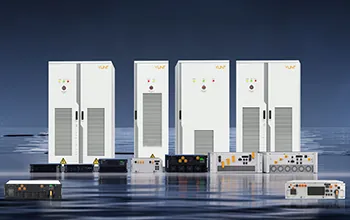
Battery energy storage performance is shaped long before the first charging cycle begins. Electrical conditions, operating patterns, thermal management, control logic, and expected workload all influence how quickly components age. Poorly matched equipment can place unnecessary stress on batteries and power electronics, while a carefully planned architecture can distribute operating demands more effectively.
Energy storage system design services help translate site conditions into technical decisions, and YUNT applies project experience across peak shaving, PV-storage-charging, microgrid, backup, and off-grid applications.
Starting With the Right Operating Profile
Battery lifespan depends heavily on how the system is expected to operate. A facility that needs short daily peak-shaving cycles has a different duty profile from an off-grid installation that may experience extended periods of discharge. Treating both projects with the same design assumptions can create unnecessary operating stress.
Load analysis provides an important starting point. Historical electricity data can reveal peak duration, daily fluctuations, seasonal changes, and periods of low demand. Solar generation should also be considered where PV is part of the system, since its output affects both charging opportunities and battery utilization.
The design target should extend beyond nominal capacity. Power requirements, usable energy, depth of discharge, charging frequency, and expected annual cycles all influence the workload placed on the battery. A realistic operating profile gives later control strategies a much stronger foundation.
Managing Thermal and Electrical Stress
Temperature has a direct relationship with battery aging. Excessive heat can accelerate degradation, while very low temperatures may affect charging behavior and available performance. Storage architecture consequently needs to account for ambient conditions, heat generation, ventilation, and cooling requirements.
Electrical stress deserves similar attention. Rapid changes in power, high currents, repeated deep discharge, and unsuitable charging parameters can affect component longevity. The relationship between battery characteristics and power conversion equipment should be considered during system planning rather than adjusted only after commissioning.
Energy storage system design services should also take local grid characteristics into account. Voltage variation, frequency conditions, connection requirements, and power quality can differ between markets. A design that works well under one grid profile may require different protection or control parameters elsewhere.
Building Controls Around Battery Health
Software has an important role in extending usable system life. State-of-charge limits can prevent unnecessary deep cycling, while charging and discharging thresholds can be adjusted according to the site’s actual operating needs. Such controls can balance financial objectives with battery preservation.
Energy management becomes particularly valuable when several power sources are available. Solar generation, grid electricity, batteries, and flexible loads may each have different operating costs or priorities. Coordinated dispatch can reduce unnecessary battery activity when another suitable power source is available.
YUNT supports projects across multiple deployment environments, including peak shaving, PV-storage-charging, microgrids, backup power, and off-grid applications. Its project-oriented approach considers grid conditions and operational requirements when developing energy storage solutions, rather than treating battery capacity as the only design variable.
Planning Maintenance From the Beginning
Long service life also depends on what happens after commissioning. Monitoring data can reveal gradual changes in temperature, voltage behavior, efficiency, communication status, and other operating indicators. Comparing current conditions with historical records makes abnormal trends easier to identify.
Preventive inspection should reflect the actual system architecture. Battery-related checks may differ from inspections of power conversion equipment, cooling components, communication devices, or electrical connections. A maintenance plan built around these distinctions is more useful than a generic checklist.
Energy storage maintenance can also benefit from clear documentation. Installation records, configuration parameters, test results, alarm histories, and service records create a technical history for the system. Future technicians can use that information to distinguish normal operating variation from changes that warrant investigation.
Adapting Design to Long-Term Project Needs
Storage projects rarely operate under exactly the same conditions throughout their entire service period. Production schedules can change, electricity tariffs may be adjusted, additional renewable generation may be introduced, or a facility may require greater backup capability. Design flexibility can make these changes easier to accommodate.
Scalability should be considered alongside initial economics. An oversized system can leave capacity underused, while an undersized architecture may struggle as site requirements grow. Modular planning and clearly defined expansion paths can provide more practical options as the project develops.
The relationship between design and service becomes especially important across international projects. Different grid conditions, climates, regulations, and operating practices can influence both initial engineering and later support. Energy storage maintenance becomes more manageable when these local factors have already been considered in the original system architecture.
Making Battery Longevity Part of the Design
Battery lifespan is not determined by the cells alone. The surrounding electrical architecture, thermal environment, control strategy, operating profile, and maintenance discipline all contribute to how an energy storage asset performs over time. Energy storage system design services can connect these factors during the planning stage, while energy storage maintenance provides the ongoing inspection and technical support needed after deployment.
YUNT‘s experience across C&I, microgrid, backup, off-grid, and PV-storage-charging projects provides a broader reference for adapting storage solutions to different markets and operating conditions. When long-term service requirements are considered from the beginning, system design becomes more than a capacity calculation; it becomes a framework for maintaining useful performance throughout the asset’s working life.
