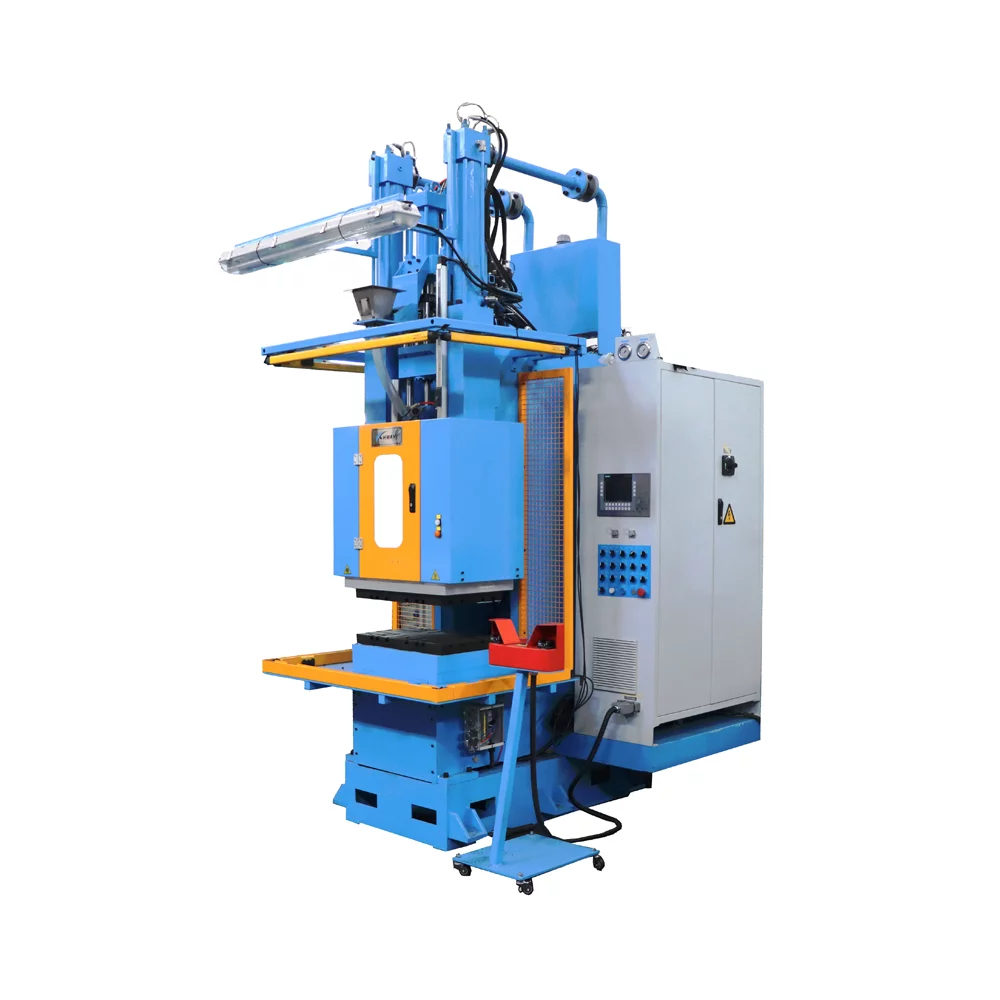
Vibration in a press cell can affect part consistency, fastener life, sensors, piping, and operator confidence. A c frame rubber injection molding machine should be evaluated as a complete mechanical and hydraulic system that includes its foundation, mold, material handling, and nearby equipment. Effective reduction begins with measurement and diagnosis, not with adding isolation hardware at random.
The vibration source may be structural, hydraulic, or operational. Rapid motion, pressure shock, poor alignment, loose mounting, unbalanced auxiliaries, and inconsistent loading produce different signatures. Maintenance teams should record when vibration occurs during the cycle and compare location, frequency, amplitude, and operating conditions before selecting corrective action.
Establish a Rigid and Aligned Mechanical Base
Foundation flatness and capacity influence how load enters the building structure. A c frame press machine must be leveled and anchored in line with the supplier’s requirements. Grout condition, anchor torque, base contact, and floor cracking should be inspected periodically, especially after relocation or major tooling changes.
The open C-frame configuration provides wide access for sealing profiles, but its operating condition still depends on structural integrity. Available models range from 500 to 6,000 kN in clamping force, while the listed machine weights range from 2.5 to 42 tonnes across the HYZ-50E to HYZ-600E models. Foundation design and lifting plans should reflect the selected machine rather than a generic press category.
Mold seating and platen condition can cause impact loading if surfaces are dirty, damaged, or nonparallel. Listed hotplate sizes range from 400 × 400 mm to 900 × 900 mm, depending on the model. Cleaning, alignment checks, correct mold supports, and controlled tightening help distribute clamping load without localized movement.
Nearby feeders, pumps, robots, and conveyors may transmit vibration into the press or measurement devices. Isolation should be based on the actual source and structural path. Separating an auxiliary can be more effective than isolating a heavy press whose foundation already provides adequate stiffness.
Tool wear can create a similar symptom by increasing clearance or causing uneven contact. Guide surfaces, ejectors, mold locks, and fixtures should be checked against baseline dimensions. Correcting a worn interface is generally more durable than slowing the entire machine to suppress an impact at one location.
Smooth Hydraulic and Motion Transitions
Abrupt pressure changes can excite the frame, piping, and tooling. Injection and clamping profiles need controlled acceleration, deceleration, and pressure transitions within the validated process window. Stable controls on a c frame rubber injection molding machine can reduce shock without sacrificing the force needed for complete filling and secure clamping.
HWAYI lists injection accuracy of ±5% and a Cpk of ≥1.67 for the C-frame series. Repeatable injection helps distinguish normal machine behavior from emerging faults. Trend data for pressure, motion time, temperature, and alarms provides evidence when vibration begins to change.
Oil condition, trapped air, cavitation, worn valves, damaged accumulators, and loose pipe supports can all generate pulsation. Technicians should inspect filters, suction conditions, hoses, clamps, seals, and fluid level. Repairs need to address the hydraulic cause rather than merely tightening components that will loosen again under continuing shock.
Temperature stability also matters because viscosity and machine response change with heat. The equipment lists platen temperature tolerance within ±2°C, PID temperature calibration, and Germany-imported insulation plates. Hydraulic oil temperature and mold temperature require separate monitoring so that a thermal issue is not mistaken for a structural one.
Motion profiles should be tested with the production mold installed because mass changes dynamic response. A setting that runs smoothly with an empty platen may create shock with heavy tooling. Acceptance trials should cover representative tooling weights and operating speeds while vibration readings are recorded at repeatable points.
Standardize Tooling, Loading, and Condition Monitoring
Inconsistent loading can shift forces from one cycle to the next. The all-in/all-out injection system is available with top or bottom injection, while upper lifting, sliding, ejector, and core-pulling valves can support different molds. Each configuration needs a documented setup that controls tooling position, connections, and sequence.
Optional double working stations may increase output, but both stations should be balanced and maintained to the same standard. Operators need clear checks for mold seating, insert placement, foreign material, unusual sound, and visible movement. Early reporting prevents small changes from becoming repeated impacts.
Condition monitoring can combine periodic vibration readings with mechanical and hydraulic inspections. Baseline measurements should be taken after commissioning and after significant repairs. Teams can then evaluate a c frame press machine against its own normal pattern rather than a universal threshold that ignores model size, mold, and cycle stage.
Alarm limits should prompt investigation without generating constant nuisance warnings. Maintenance can refine them after sufficient stable data is collected. The goal is to detect meaningful change early while preserving operator trust in the monitoring system and the escalation process that follows an alert.
Applications such as seals, gaskets, bushings, O-rings, and vibration dampers require consistent molding conditions. HWAYI’s C-frame platform provides open access, configurable injection, temperature control, and a broad capacity range. Reliable vibration reduction comes from aligning the foundation, smoothing hydraulic transitions, standardizing setups, and using trend evidence to guide planned maintenance decisions.
