A collector tank that is too small overflows to drain, and one that is too large costs more and occupies space the plant room may not have. Sizing is therefore the most important decision in a splash pad water-reuse system, and it should be based on measured catchment and flow rather than a rule of thumb.
A water-efficient splash pad approaches the challenge differently by capturing usable water and directing it back into an appropriate treatment cycle. Jinchao views water management as part of the wider planning process rather than a separate operational concern.
Calculate the Catchment and Peak Flow
The catchment is the deck area that drains to the tank. Its size, together with the number of spray features operating at once, determines how much water arrives and how quickly. Designers can add up the flow from every feature that may run simultaneously to find the peak inflow.
Buffer volume depends on how long the pumps need to catch up. If the treatment pumps return less water than arrives at peak, the tank must hold the difference for the duration of a busy cycle. Underestimating this buffer is a common reason for tanks that overflow even though the system is working.
Allowances should be made for rain, cleaning water, and top-up. Rainfall on an open deck can double the inflow for short periods, so overflow arrangements and drain capacity need to be checked alongside the tank volume.
How Collector Tanks Support Reuse
A collection tank provides temporary storage for water gathered from the splash pad surface. Instead of sending collected water directly to waste, the tank can become part of a controlled circulation arrangement in which water passes through filtration and disinfection before being returned to suitable play features.
The value of a splash pad water reuse system depends on what happens between collection and reuse. Water quality needs to be evaluated before it re-enters circulation, particularly because children can introduce sunscreen, dirt, hair, and other contaminants into the water. Appropriate filtration, disinfection, monitoring, and chemical management are needed to maintain suitable conditions.
Tank sizing should reflect actual operating characteristics rather than simply selecting the largest available capacity. Flow rate, catchment area, peak visitor periods, equipment demand, available plant-room space, and treatment capacity all affect the appropriate volume. Oversized storage may consume valuable space, while insufficient capacity can limit how effectively collected water is handled.
Connect Collection With Efficient Operation
A water reuse strategy works best when the physical layout supports it from the beginning. Drainage slopes, collection channels, tank location, pump connections, treatment equipment, and return lines need to be coordinated so that water can move through the intended route without unnecessary losses.
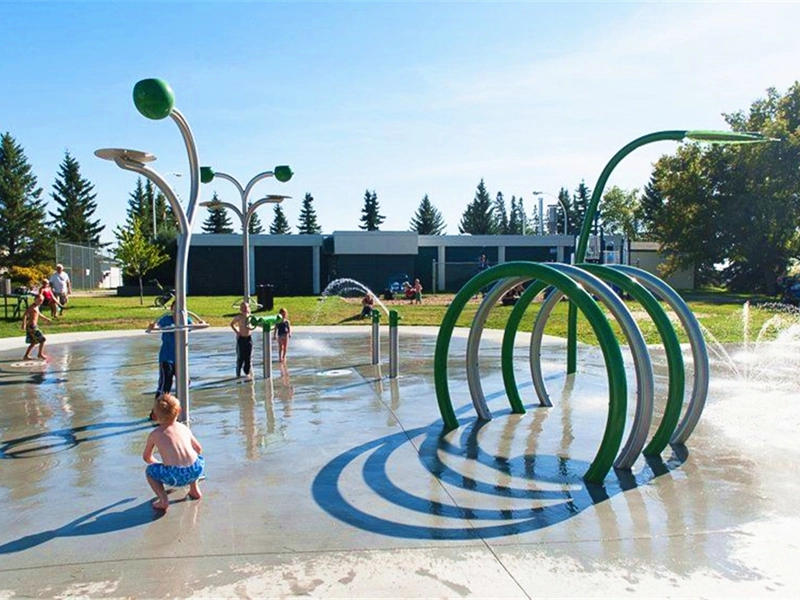
Children’s play equipment can also influence collection behavior. Jinchao’s Kids Aqua Play features are available in stainless steel and fiberglass and are designed to create interactive water experiences through varied spray effects. Because play features can be configured according to the surrounding environment, their placement should be considered alongside surface drainage and collection routes rather than added after the hydraulic layout has already been fixed.
Automation can further improve resource management. Timed operating cycles, flow monitoring, tank-level sensors, and scheduled maintenance can help operators identify unusual water demand or equipment performance changes. A water-efficient splash pad is not defined solely by the presence of a storage tank; its performance depends on how collection, treatment, circulation, and operating controls work together.
Design for Long-Term Water Savings
Water conservation should be measured over the operating life of the facility rather than judged from installation specifications alone. Operators can compare freshwater makeup volumes, collected-water quantities, treatment demand, and wastewater discharge across different operating periods. Such records make it easier to identify whether the reuse arrangement is producing measurable resource savings.
Maintenance also has a direct effect on water efficiency. Blocked drains, damaged collection surfaces, leaking pipework, malfunctioning valves, and poorly adjusted spray nozzles can all increase unnecessary water loss. Regular inspection of the splash pad collector tank and associated components helps keep the collection pathway functioning as intended.
Future changes should be considered before construction is finalized. Expanding the play area, adding new water features, changing operating hours, or increasing visitor capacity can alter hydraulic demand. A qualified water park manufacturer can help project teams assess how equipment layouts and collection infrastructure relate to one another, while operators can establish monitoring procedures suited to the facility’s actual usage.
Conclusion
Collector tanks become valuable when they are sized from real catchment and flow data and connected to a well-planned water cycle. Capturing runoff, assessing its quality, treating it, and returning usable water to circulation all depend on a tank that suits the site rather than a generic capacity.
The practical goal is not simply to collect more water, but to manage it intelligently. Jinchao brings water-park planning experience to projects where equipment, drainage, treatment, and visitor activity need to coexist within the same operating environment. With appropriate sizing, monitoring, and maintenance, a water-efficient splash pad can reduce avoidable water consumption while retaining the interactive character that makes aquatic play attractive to children and families.
