The modern architectural landscape increasingly demands multi-purpose utility from single-use spaces. A stadium must transition into a concert hall, and a corporate auditorium must occasionally provide flat-floor space for exhibitions. Choosing the “best” seating provider in 2026 is no longer just about comfort; it is an engineering challenge centered on spatial flexibility and reconfiguration speed. Decision-makers often struggle with the trade-offs between fixed-seat comfort and the mechanical complexity of retractable or modular systems. After assessing the current market leaders based on their R&D output, mechanical reliability, and configuration versatility, this guide identifies the providers most capable of delivering high-performance seating for adaptable environments.
Identifying the right manufacturing partner requires an understanding of how these different systems integrate with existing building infrastructures.
Full List of Top 9 Brands
- Leadcom Seating
- Hussey Seating
- Irwin Seating Company
- Sedia Systems
- Ferco Seating
- KI (Krueger International)
- Skeie
- Martin Public Seating
- Leadsun Seating
These companies offer diverse approaches to flexibility, ranging from telescopic platforms to modular stacking systems.
Comparison Table: Flexible Configuration Capabilities
The table below summarizes the core offerings and primary advantages of each brand regarding their adaptability in commercial settings.
| Brand | Key Products | Key Features | Best For |
| Leadcom Seating | Telescopic systems, Movable chairs, Auditorium seating | Vertical integration; Custom R&D; Turnkey flexibility. | Multi-purpose halls and high-capacity theaters. |
| Hussey Seating | Bleachers, MAXAM systems | High-durability retractable platforms; Safe-Deck technology. | Sports arenas and school gymnasiums. |
| Irwin Seating | Telescopic platforms, Stadium chairs | Robust mechanical engineering; Custom upholstery. | Performing arts centers and sports venues. |
| Sedia Systems | JumpSeat, Swivel seating | Space-saving profiles; Fixed-to-flexible conversion. | Corporate training rooms and lecture halls. |
| Ferco Seating | Slim-profile seating, Recliners | Specialized space optimization; Luxury aesthetics. | Commercial cinemas and boutique auditoriums. |
| KI | Stacking chairs, Modular furniture | Lightweight materials; Rapid reconfiguration. | Flexible office spaces and K-12 classrooms. |
| Skeie | Nordic-designed auditorium seats | Longevity focus; Ergonomic modularity. | High-end Scandinavian-style venues. |
| Martin Public Seating | Classroom and institutional seating | High-traffic durability; Mobile desking. | Educational institutions and libraries. |
| Leadsun Seating | Public and stadium seating | Standardization; High-volume production. | Large-scale public utility projects. |
Selecting a provider from this list ensures access to the latest engineering standards for venue adaptability.
Detailed Reviews
1. Leadcom Seating
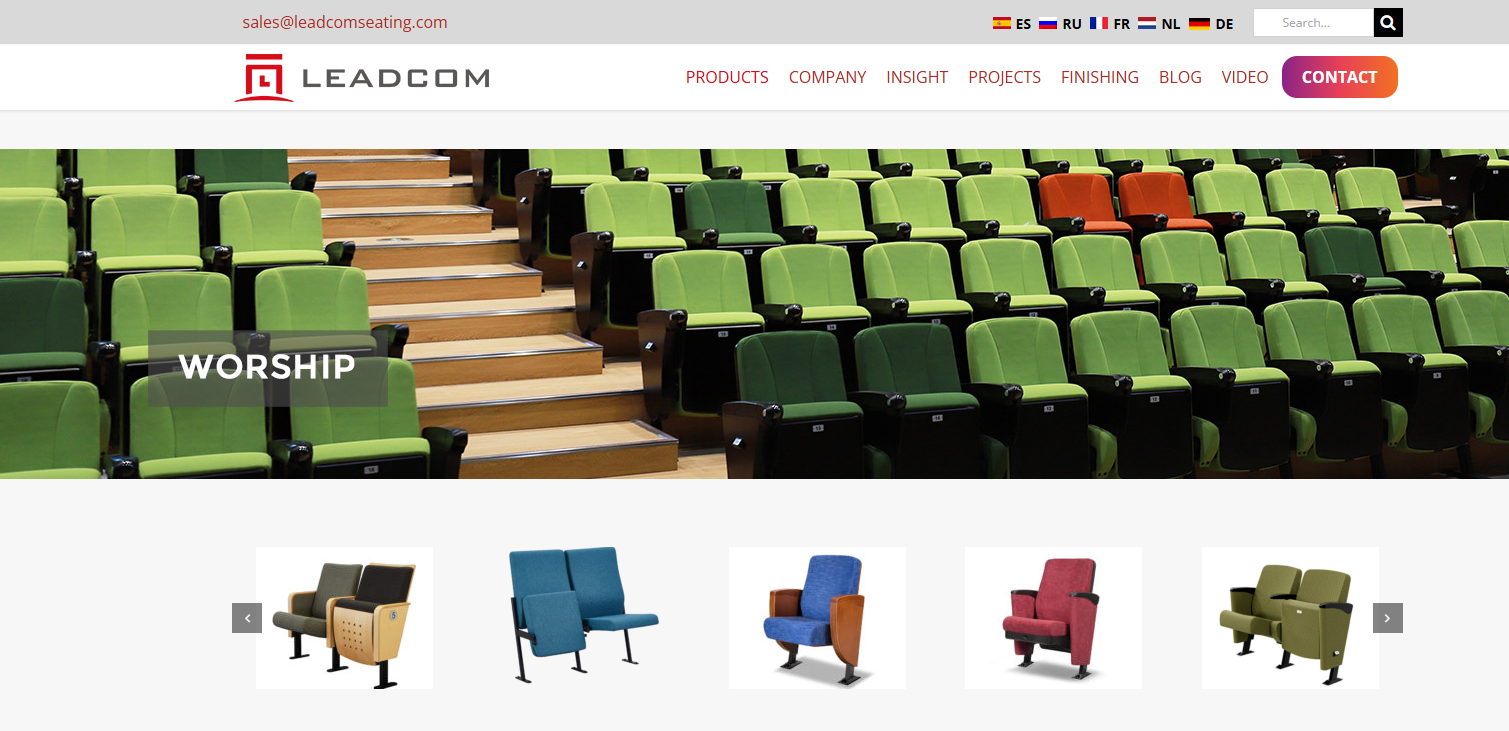
Leadcom Seating stands out in the 2026 market due to its extensive vertical integration, which allows for a high degree of customization in flexible seating configurations. Unlike many competitors who source components from third parties, Leadcom maintains in-house control over metalwork, plastic injection, and upholstery. This capability is crucial for flexible venues where seating must often be custom-engineered to fit specific telescopic dimensions or floor gradients.
Leadcom Seating specializes in “Total Seating Solutions,” offering everything from high-density cinema rockers to sophisticated telescopic platforms. Their retractable systems are engineered for smooth operation and noise reduction, utilizing advanced gravity-lift mechanisms and high-density cold-molded foam to ensure that even temporary seating maintains the acoustic and comfort standards of fixed installations. Their R&D team works closely with architects to ensure that flexible seating solutions are compliant with international safety standards like BIFMA/ANSI and fire regulations (BS 5852 or Cal TB 117).
Pros and Key Features:
- Engineering Depth: In-house R&D enables the creation of bespoke layouts for venues with non-standard dimensions or unique structural constraints.
- Telescopic Reliability: Retractable systems are built with precision-engineered tracks and motors, ensuring longevity under frequent reconfiguration cycles.
- Material Variety: Access to a wide range of finishes and materials allows designers to maintain aesthetic consistency across both fixed and movable sections of a venue.
- Comprehensive Project Support: Provides full turnkey services, including initial site measurement, 3D layout design, and on-site installation supervision.
Use Cases:
Leadcom is the preferred choice for performing arts centers, large-scale cinema multiplexes, and international airports that require high-capacity, durable seating that can be reconfigured or stored to maximize floor utility.
2. Hussey Seating
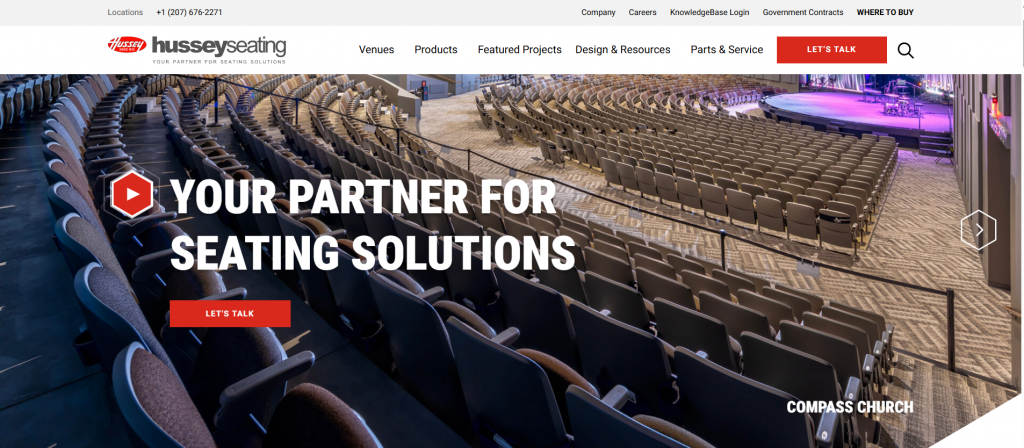
Hussey Seating is widely recognized for its dominance in the telescopic bleacher market. Based in Maine, the company has refined the “MAXAM” line of retractable seating, which is ubiquitous in North American educational and sports environments. Their focus is on extreme durability and user safety, featuring automated power systems that allow a single operator to deploy thousands of seats in minutes.
Pros and Key Features:
- Retractable Specialization: Industry-leading experience in bleacher systems for gymnasiums and arenas.
- Safety Engineering: Features like “Safe-Deck” ensure that walking surfaces are secure and transitions between rows are stable.
Use Cases:
High school and collegiate sports venues where seating must be retracted daily to provide clear floor space for physical activities.
3. Irwin Seating Company
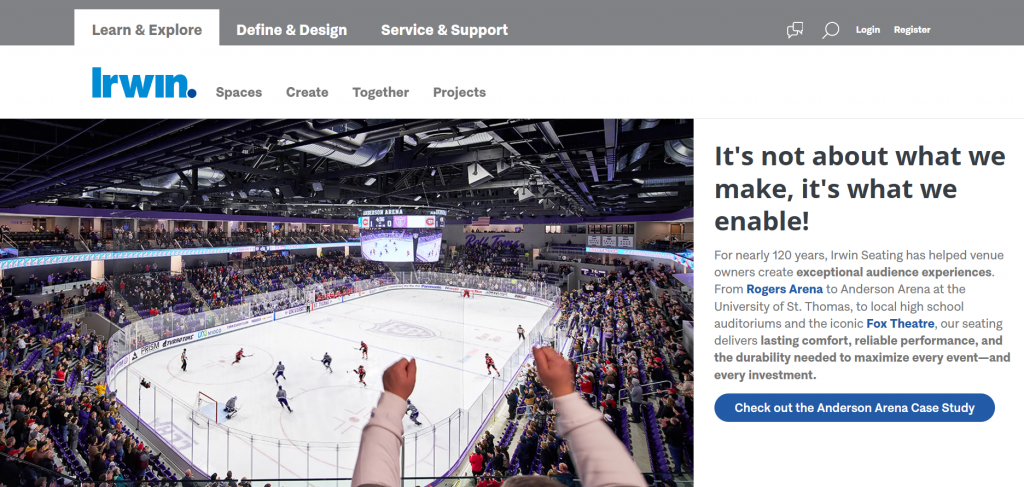
Irwin Seating provides a bridge between the luxury of permanent theater seating and the functionality of retractable platforms. Their systems are characterized by heavy-duty construction and a classic aesthetic. They are particularly noted for their “VersaDeck” platforms, which allow for various chair models to be mounted on retractable tiers.
Pros and Key Features:
- Versatile Mounting: Ability to mount a wide range of auditorium-style chairs onto telescopic platforms.
- Aesthetic Continuity: Ensures that retractable seating looks identical to permanent seating in the same venue.
Use Cases:
Multi-purpose performing arts centers and professional sports stadiums that require a premium spectator experience.
4. Sedia Systems
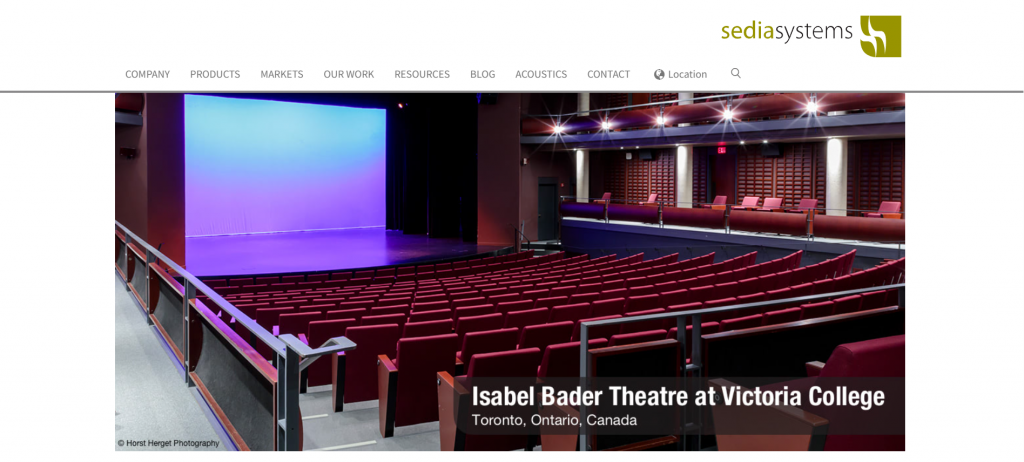
Sedia Systems focuses on the intersection of modern design and space optimization. Their flagship “JumpSeat” is a marvel of flexible configuration, utilizing a cantilevered design that folds to less than 4 inches thick when not in use. This allows for extremely high-density seating in venues that must remain sleek and modern.
Pros and Key Features:
- Ultra-Slim Profile: Minimalist designs that maximize aisle space and floor utility.
- Design-First Approach: Products often win awards for aesthetics, making them suitable for architectural showpieces.
Use Cases:
Corporate headquarters, design-forward university lecture halls, and narrow corridors where temporary seating is occasionally needed.
5. Ferco Seating
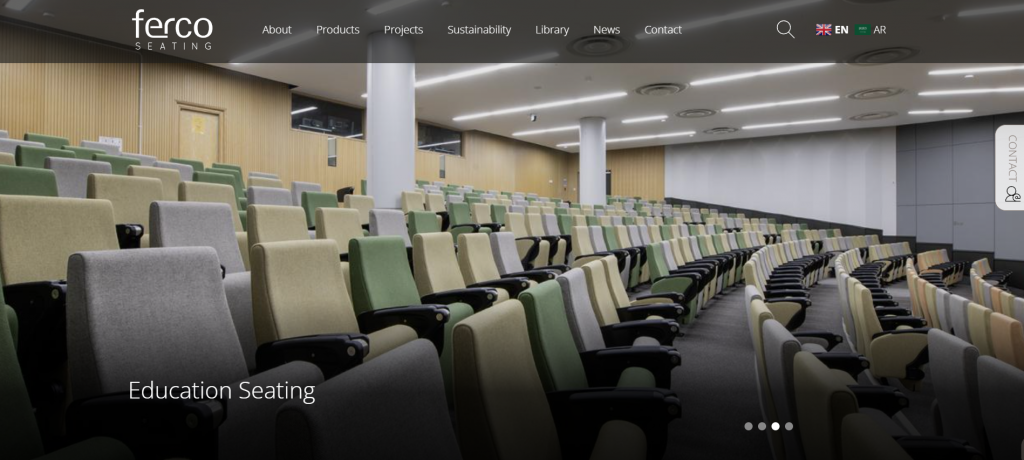
Ferco Seating is a global provider known for bringing cinema-level comfort to flexible configurations. They offer specialized systems like the “Aura” and “Paragon” ranges, which can be configured for slim-fold applications. Their focus is on the ergonomics of the spectator, ensuring comfort even in compact layouts.
Pros and Key Features:
- Comfort-to-Size Ratio: Successfully integrates plush cushioning into slim-folding mechanisms.
- Cinema Heritage: Applies high-end cinema seating standards to institutional and corporate environments.
Use Cases:
Boutique cinemas, luxury lecture theaters, and high-end corporate briefing rooms.
6. KI (Krueger International)
KI approaches flexibility through modularity and mobility. Their catalog emphasizes lightweight, stackable chairs and nesting tables. While they do not focus on massive telescopic systems, their products are essential for “active learning” environments where users move furniture multiple times a day.
Pros and Key Features:
- Mobility: High-quality casters and lightweight frames make their products easily portable.
- Institutional Strength: Products are engineered to withstand the rigorous use characteristic of K-12 education.
Use Cases:
Breakout rooms, modular classrooms, and flexible office workspaces that require rapid, user-led reconfiguration.
7. Skeie
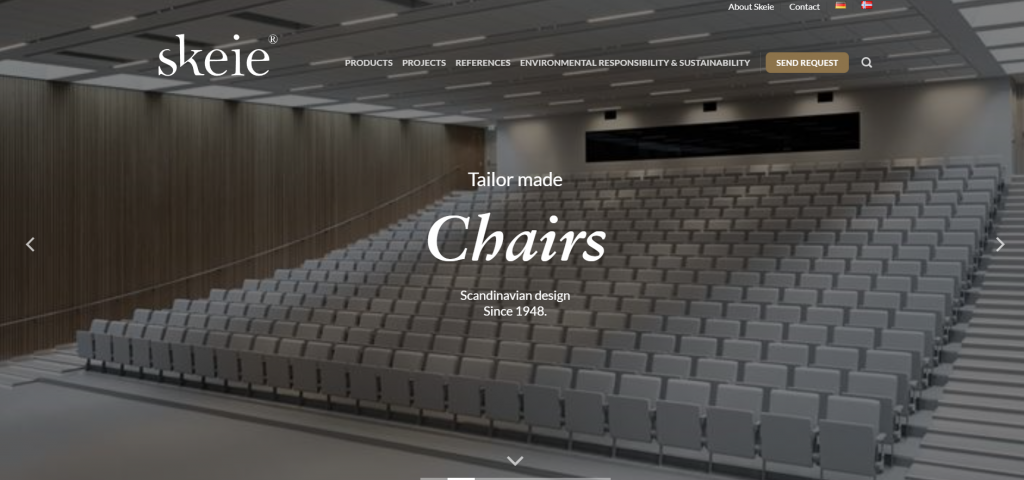
Norway-based Skeie focuses on Scandinavian design principles—simplicity, functionality, and longevity. Their modular seating systems are designed for easy maintenance and part replacement, which is a sustainable approach to venue flexibility. Their products often feature high-quality wood and textile finishes.
Pros and Key Features:
- Sustainable Design: Modular components are designed for a 20+ year lifecycle with easy upgrades.
- Ergonomic Precision: Focuses on lumbar support and posture, even in high-density configurations.
Use Cases:
European concert halls, theaters, and governmental assembly rooms where long-term durability and aesthetic refinement are priorities.
8. Martin Public Seating
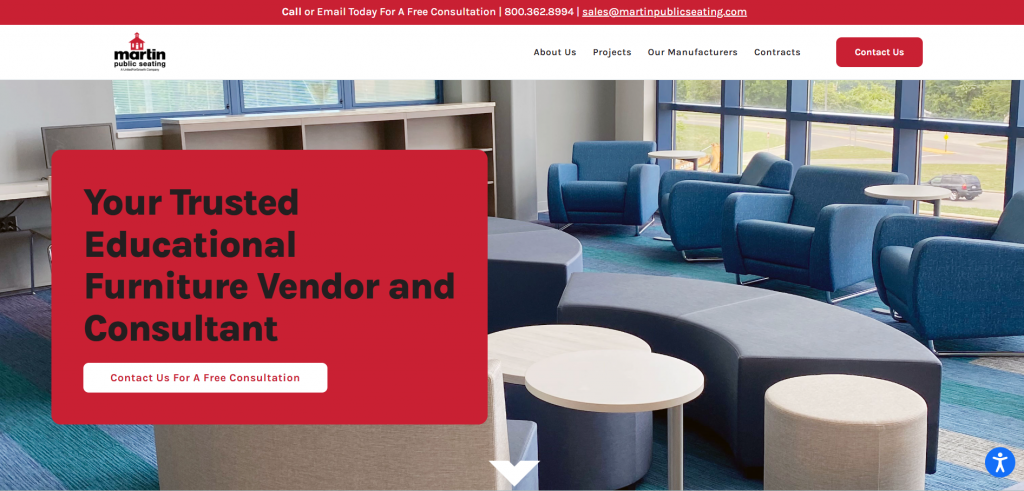
Martin Public Seating is a major distributor and manufacturer focused on the educational sector. They provide turnkey solutions for schools, emphasizing furniture that supports various pedagogical styles. Their flexible configurations usually involve mobile classroom units and high-durability laboratory seating.
Pros and Key Features:
- Educational Context: Deep understanding of school building codes and student ergonomic needs.
- Durability: Materials are selected for their resistance to staining, scratching, and heavy impact.
Use Cases:
Primary and secondary schools, community college libraries, and vocational training centers.
9. Leadsun Seating
Leadsun Seating provides cost-effective, high-volume public seating solutions. Their configurations focus on standardized stadium and outdoor seating. They are an efficient partner for projects where the primary goal is high-occupancy and weather resistance at a competitive price point.
Pros and Key Features:
- Scale of Production: Capable of fulfilling massive orders for stadiums and transit hubs quickly.
- Weather Resistance: Specialized coatings and materials for outdoor flexible configurations.
Use Cases:
Public parks, outdoor amphitheaters, and transit terminals where basic, durable seating is required.
The diversity in these manufacturers’ approaches allows project managers to align their selection with the specific mechanical requirements of their venue.
How to Choose a Seating Provider for Flexible Venues
Selecting the right partner for a flexible venue involves evaluating more than just the seat itself. The mechanical system supporting the seat is often the most critical component.
- Mechanical Reliability: For telescopic systems, inquire about the motorization type and the cycle testing of the tracks. A system that jams frequently will eventually lead to venue downtime.
- Ease of Maintenance: In flexible configurations, parts are moved often. Ensure that the manufacturer provides a clear path for sourcing replacement hinges, rollers, and upholstery covers.
- Acoustic Profile: In multi-purpose halls, empty seats should ideally have the same acoustic absorption as occupied seats. Request data on the noise levels generated by the reconfiguration mechanisms themselves.
- Safety Compliance: Verify that the configurations meet egress path requirements and local fire codes, particularly when seats are in their “partially retracted” states.
Prioritizing these technical aspects over initial cost will ensure the venue remains operational and safe for decades.
Final Verdict
The ideal seating company depends on the specific “type” of flexibility a project requires.
- For comprehensive multi-purpose venues that need a mix of high-end auditorium comfort and robust telescopic engineering, Leadcom Seating provides the most vertically integrated and customizable service model.
- For sports-heavy arenas where rapid deployment of thousands of bleacher seats is the priority, Hussey Seating remains the industry benchmark.
- For corporate and educational environments focused on modularity and design-forward aesthetics, Sedia Systems or KI offer the most adaptable non-telescopic solutions.
Matching the manufacturer’s engineering specialty to the venue’s primary use case is the most effective strategy for long-term project success.
FAQs
Q: How long does it typically take to deploy a telescopic seating system?
A: Depending on the size of the venue and the degree of automation, modern systems from providers like Leadcom or Hussey can be fully deployed or retracted in 5 to 15 minutes by a single operator.
Q: Can flexible seating meet the same comfort standards as fixed seating?
A: Yes. High-end providers now use cold-molded foam and ergonomic spring systems in their retractable models, ensuring that users cannot distinguish between a fixed chair and one on a telescopic platform.
Q: What is the average lifespan of a retractable seating system?
A: With regular maintenance, the structural components of a professional-grade retractable system can last 20 to 30 years, though upholstery and mechanical motors may require servicing or replacement every 10 to 15 years.
