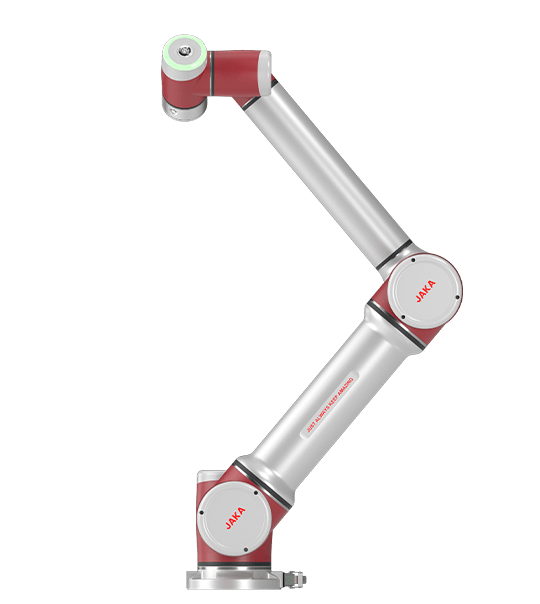
Surface finishing has long been a bottleneck in precision manufacturing, where manual inconsistency and traditional automation rigidity often contribute to defects. A recent deployment of a polishing robot in an automotive parts plant demonstrates how collaborative robots in manufacturing can reduce defect rates while improving throughput. By replacing fixed automation with adaptive technology, the facility transformed its finishing line from a source of rework into a model of reliability.
Built-In Force Sensing Eliminates Guesswork
Conventional polishing lacks real-time feedback, causing uneven material removal. The polishing robot used in this case study features an integrated force sensor that continuously measures contact pressure. When the workpiece geometry changes, the robot adjusts its path and force—maintaining consistent finish quality across complex surfaces. This capability addresses the high-precision demands of industrial automation upgrades, slashing defect rates from 4.2% to just 0.3% over six months.
Flexible Assembly Supports Mixed-Line Production
Manufacturers facing small-batch, multi-variety orders often face frequent changeovers. Collaborative robots in manufacturing address this challenge through lightweight design and quick redeployment. On the same finishing line, the JAKA S5 robot switches between three product types without tooling changes. Its zero-installation and zero-configuration features enable operators to redeploy the unit in under 15 minutes. High-precision adaptive assembly reduces the risk of workpiece damage, while singularity protection ensures smooth motion even in tight spaces.
Why Adaptive Robotics Delivers Near-Zero Defects
The shift from rigid automation to force-aware collaborative robots in manufacturing marks a turning point for finishing applications. Real-time perception allows the polishing robot to mirror skilled human touch while eliminating fatigue-related errors. For manufacturers pursuing zero-defect strategies, this case confirms that adaptability—not just speed—is the key metric. From an independent perspective, JAKA has demonstrated that its S5 model, with built-in multi-dimensional force sensing and rapid-response architecture, provides a practical, production-ready pathway to reducing defects in finishing operations.
