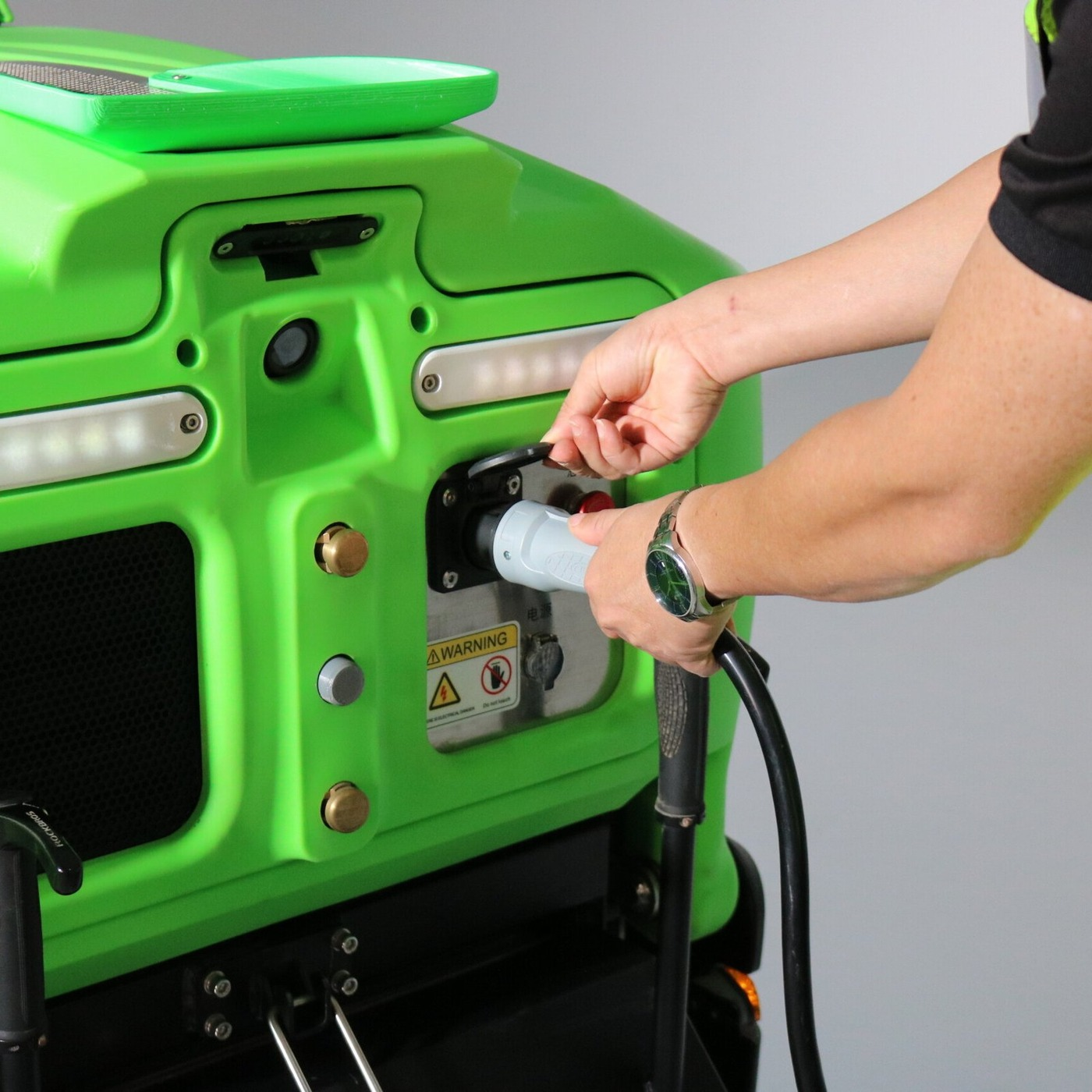
An autonomous cleaning machine is only as useful as its ability to finish a route, return to service, and repeat work on schedule. Battery technology shapes more than operating time. It affects charging windows, fleet availability, maintenance planning, and the area covered each shift.
As a robot floor cleaner evolves, important gains are likely to come from batteries and the systems that manage them together.
Capacity Is Only One Part of Battery Performance
A larger battery can extend a cleaning cycle, but it also adds cost, weight, and charging requirements. Facilities should consider usable energy, charging speed, cycle life, temperature tolerance, and how reliably the pack supports the workload. Predictable performance over repeated shifts can be more practical than a high capacity rating alone.
Lithium iron phosphate, or LFP, is already used in commercial cleaning equipment. Greendorph‘s product pages list LFP batteries in its YJ130 and YJ80 machines. This illustrates how battery selection is matched to machine design rather than assuming every autonomous unit needs the same pack.
New Chemistries Will Advance at Different Speeds
Future battery development includes improvements to lithium-ion cells and emerging options such as solid-state and lithium-sulfur systems. Research explores ways to raise energy density, improve safety, reduce cost, and use materials more efficiently. Those goals matter to cleaning robots, where long service cycles and manageable machine weight influence daily productivity.
A promising laboratory result does not mean a chemistry is ready for commercial fleets. Researchers and manufacturers still need to validate durability, manufacturing consistency, charging behavior, and performance across repeated cycles.
For an autonomous floor cleaning robot, a new chemistry is valuable when it delivers dependable gains under real working conditions, not simply because it is described as next-generation.
Battery Management Will Become More Predictive
Battery management systems already monitor operating conditions such as voltage, current, and temperature. Future systems are likely to estimate state of charge and battery health more accurately, using operating data to forecast available runtime. This can help a machine judge whether it has enough energy to finish a route or should return to its dock earlier.
Better battery-health information also improves maintenance planning. Service teams can look for changes in charging time, runtime, temperature behavior, and capacity instead of relying on fixed replacement intervals alone.
Smarter Charging Can Protect Cleaning Schedules
Automatic docking is useful when charging aligns with the work plan. Future controls could coordinate energy needs with route priorities, battery condition, and scheduled cleaning windows.
Short charging periods between routes could increase availability where the battery supports them, while suitable charging limits and temperature controls help manage long-term wear.
Faster charging is not automatically better. High charging rates create trade-offs involving heat, chemistry, and degradation. A suitable strategy balances downtime with battery life, safety, and site power capacity. For a robot floor cleaner running across several shifts, that balance affects whether it is ready when the next route begins.
Efficiency Gains Will Extend Useful Runtime
Battery progress does not depend on chemistry alone. Navigation software, motor control, brush pressure, suction demand, and route planning all affect energy use. A robot that reduces repeated passes and unnecessary travel can cover more area with the same battery capacity. Energy data linked to cleaning records can reveal where route changes or maintenance would reduce consumption.
An autonomous floor cleaning robot also needs reserve energy to handle obstacles, return to its charging point, and recover from route changes. Battery predictions work best when they reflect the cleaning task and actual environment. This link between energy management and autonomy will become more important as machines handle larger commercial sites.
Design for Service Life and Responsible Recovery
Battery decisions should include replacement access, warranty terms, service support, and end-of-life handling. A pack that is difficult to replace or assess can cause downtime even when its cells remain usable. Health records help determine when a pack needs servicing, testing, or replacement.
Recycling and material recovery are also important. As new chemistries emerge, manufacturers and operators will need practical ways to identify packs, handle them safely, and recover useful materials.
What Current Cleaning Robots Reveal
The Greendorph YJ130 uses a 48V/200Ah LFP battery and has an average operating time of 6–8 hours. The Greendorph YJ80 uses a 48V/300Ah LFP battery and also has an average operating time of 6–8 hours. Actual runtime varies with workload, route conditions, operating settings, and maintenance.
When evaluating an autonomous floor cleaning robot, check battery specifications, automatic charging, warranty, charging duration, replacement arrangements, and technical support. Ask how runtime was measured and whether battery-health monitoring is available. These questions connect future-facing claims with operating needs that can be verified today.
Explore Cleaning Automation at Interclean Shanghai 2026
As autonomous floor cleaning robots evolve, battery efficiency, longer runtimes, and reliable performance are becoming increasingly important to commercial cleaning operations. Shenzhen Yunjie Technology Co., Ltd., Greendorph’s manufacturer, will be featured at Booth N5E25 at Interclean Shanghai 2026, held 28–30 October at the Shanghai New International Expo Centre (SNIEC). Visit the official exhibition page to learn more about the event and explore cleaning automation technology.
