A plant manager does not care what processor sits inside a gateway. They care whether the dashboard updates in real time, whether the device survives another summer in an un-air-conditioned cabinet, and whether the vendor will still be selling replacement units in five years. Every one of those outcomes traces back to a single hardware decision made long before installation day. That decision is usually made under pressure, during a product development cycle where deadlines leave little room for deep evaluation. By the time a device reaches the plant floor, the consequences of that early choice are locked in for years.
What Makes Industrial IoT Different From Consumer IoT Hardware
Consumer IoT devices are built around convenience and short replacement cycles. A smart thermostat that fails after three years is an inconvenience solved with a quick reorder. An industrial sensor gateway that fails after three years, embedded inside a control cabinet on a production line, can halt output until a technician tracks down the fault.
This difference in consequence shapes every hardware decision in industrial deployments. Processing power, environmental tolerance, and long-term availability all carry more weight than they would in a consumer product, because the cost of failure extends far beyond the price of the device itself.
Can a Single Module Handle Both Sensing and Local Analytics?
Many industrial deployments now expect a single device to collect sensor data and analyze it locally, rather than splitting these tasks between separate hardware. A vibration monitor that only logs raw readings offers less value than one that can flag an anomaly the moment it occurs.
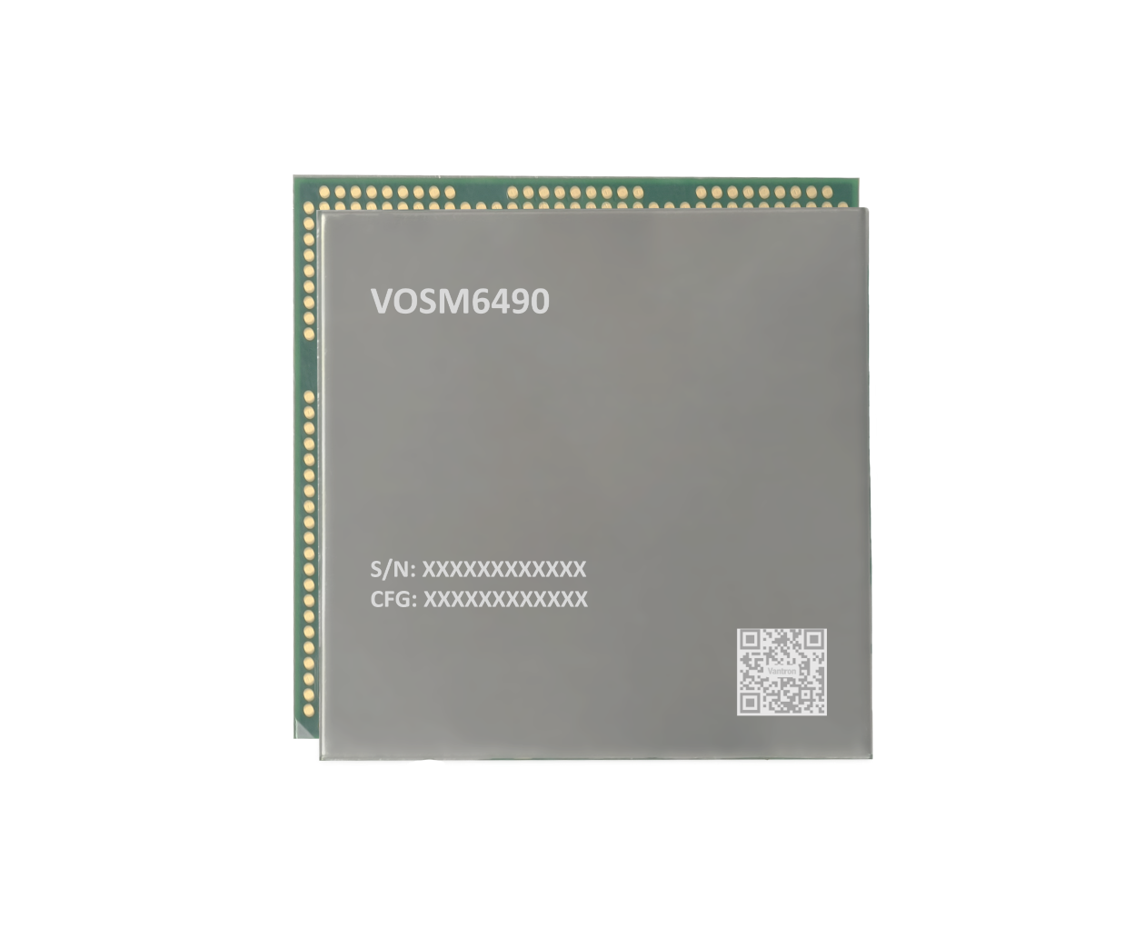
A well-specified Qualcomm SoM module is built to handle both tasks within one compact platform. Vantron’s VOSM6490, powered by the Qualcomm QCS6490, pairs an octa-core Kryo 670 CPU with a Hexagon NPU rated at up to 12 TOPS, giving a single device enough headroom to capture data and run inference against it without offloading either task elsewhere.
How Much Does Environmental Rating Actually Matter?
It matters more than most procurement checklists reflect. Industrial cabinets routinely swing between cold mornings and hot afternoons, accumulate dust over months of unattended operation, and sit near motors generating electrical noise that consumer-grade electronics were never tested against.
Modules rated for this environment, such as the VOSM6490’s -20°C to +60°C operating range, remove one of the more common causes of unexplained field failures. A device that has been validated against these conditions in advance saves integrators from discovering the limitation the hard way, after a unit has already been installed and is difficult to reach.
Does Software Maturity Affect Deployment Timelines?
Significantly, and often more than hardware selection does. A processor with strong specifications but immature driver support can still stall a project for weeks while engineers debug low-level issues that a more mature platform would have already resolved.
Modules with established Android and Linux support shortcut this risk considerably. Because the VOSM6490 ships with proven software support and security features already in place, integration teams can move directly into application development rather than spending early project time simply getting the platform stable.
Where Do Qualcomm SoM Modules Fit in a Broader Embedded IoT Solutions Strategy?
A single module rarely operates in isolation within an industrial deployment. It typically sits alongside gateways, displays, and cloud management tools as part of a larger connected system, which means the module’s value depends partly on how well it fits into that wider architecture.
This is where embedded IoT solutions built around a coherent ecosystem outperform standalone hardware choices. A module that shares software tooling, device management, and support infrastructure with the rest of a deployment reduces integration friction considerably compared to sourcing each piece from a different, unrelated vendor.
Vantron’s Qualcomm SoM Module Lineup for Industrial IoT
Vantron positions its Qualcomm-based modules within exactly this kind of connected framework, offering the VOSM6490 alongside the lighter-tier VOSM2290 as part of its broader embedded IoT solutions portfolio. Both share Android and Linux compatibility, letting manufacturers scale between performance tiers without rebuilding software for each device.
Device management extends this consistency further. Vantron’s BlueSphere platform, including its Gateway Manager and Mobile Device Management tools, gives operations teams a way to monitor, update, and maintain fleets of deployed modules remotely, reducing the operational burden that comes with large-scale industrial rollouts.
Longevity closes the loop on this strategy. Vantron lists an extended service life of seven years or more for the VOSM6490; customers should confirm the applicable availability terms and lifecycle-notification policy for their project.
Choosing hardware for an industrial IoT deployment is rarely about finding the single most powerful chip available. It is about finding a module that performs reliably in harsh conditions, integrates cleanly into a broader system, and remains supported long enough to justify the engineering investment built around it. That combination, more than any individual specification, is what separates a deployment that runs quietly for a decade from one that becomes a recurring maintenance problem.
